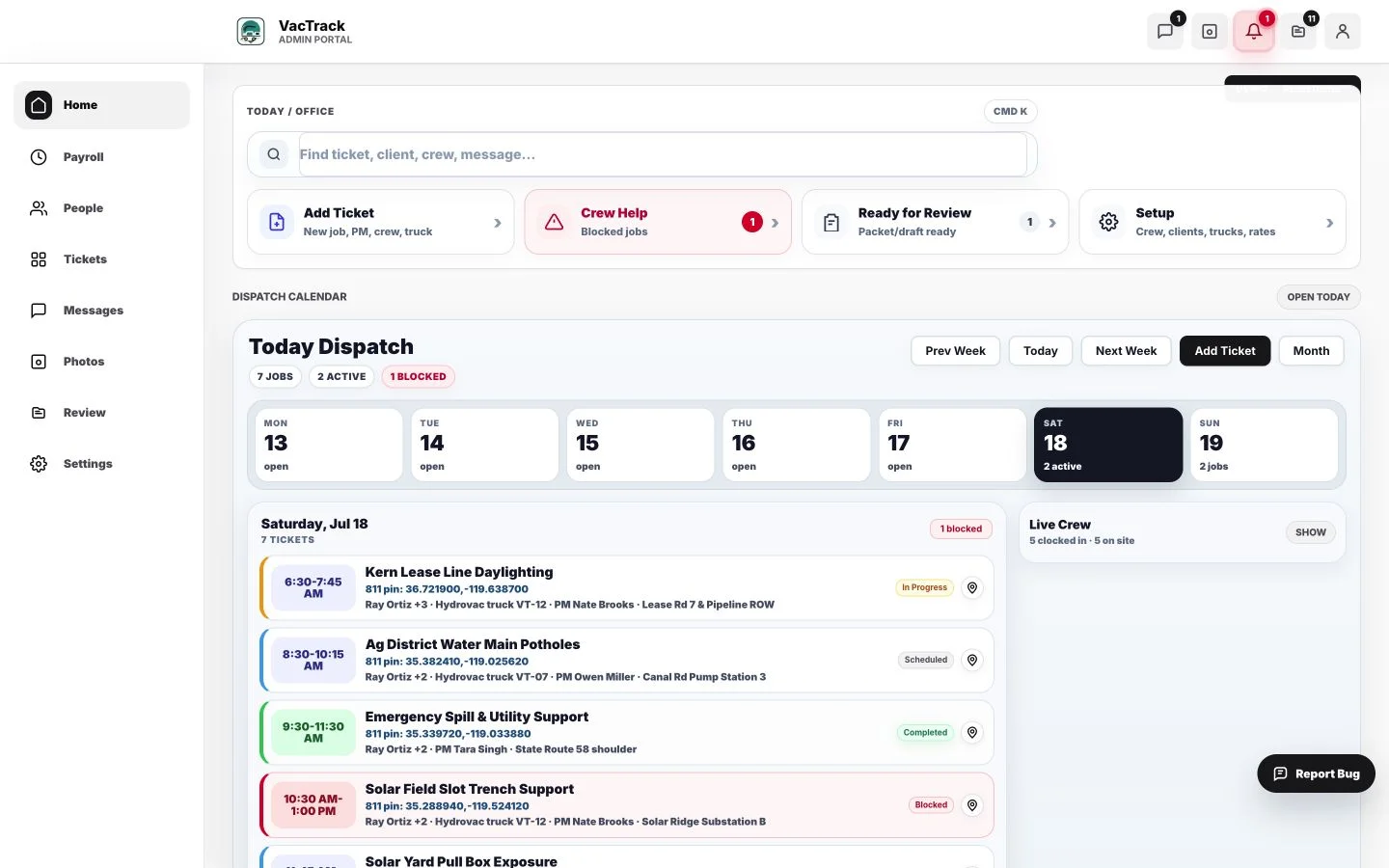
Part of Walter’s evolving world.
The Walter story ↗CAD & hardware design study
Walter / Physical Design
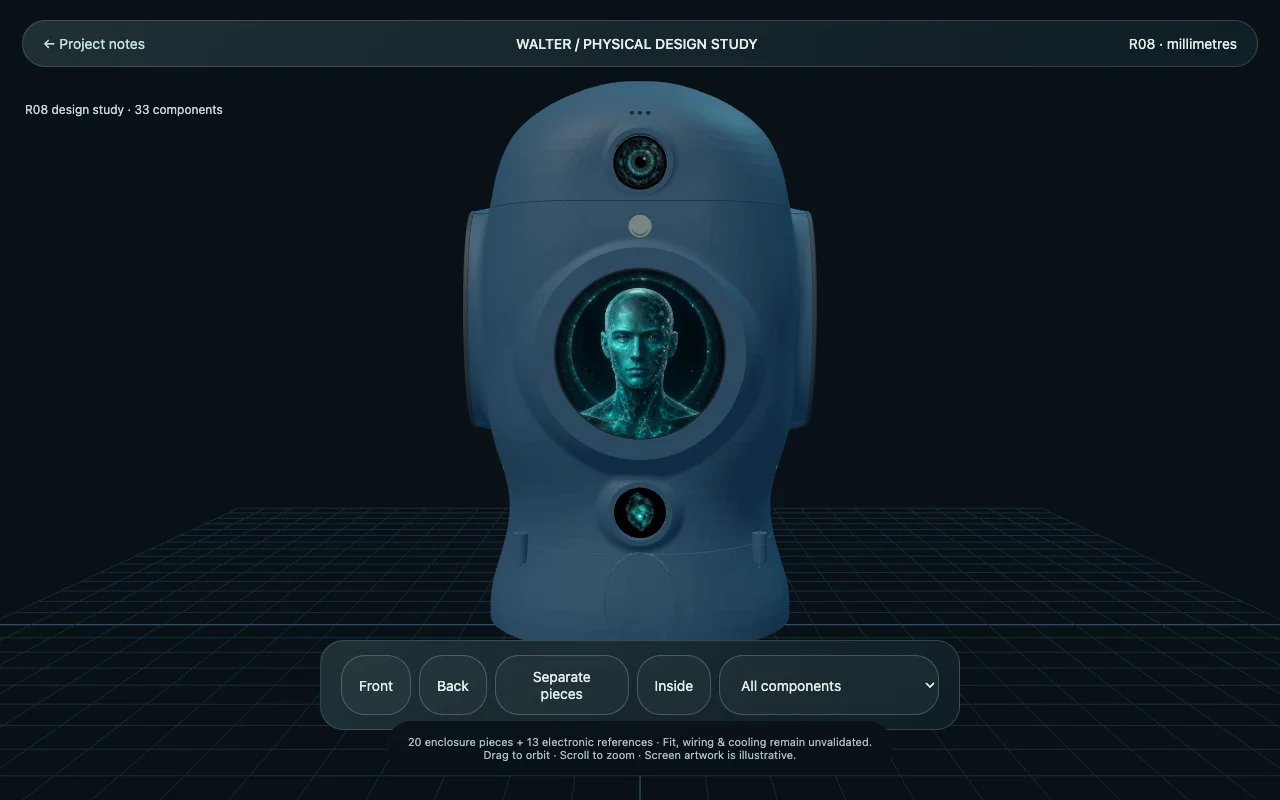
A sculpted robot-head enclosure developed around screens, electronics, mounting, and access for future assembly and service.
Your first visit
Open the 3D study, rotate the head, then try Separate pieces and Inside. The model loads only when you choose to open it.
01 / The idea
Giving a character a physical home.
Walter began as a character on a screen. Giving him a physical form introduces a different set of questions: what fits, how it mounts, where cables go, and how someone reaches the parts later.
02 / The approach
The choices behind it.
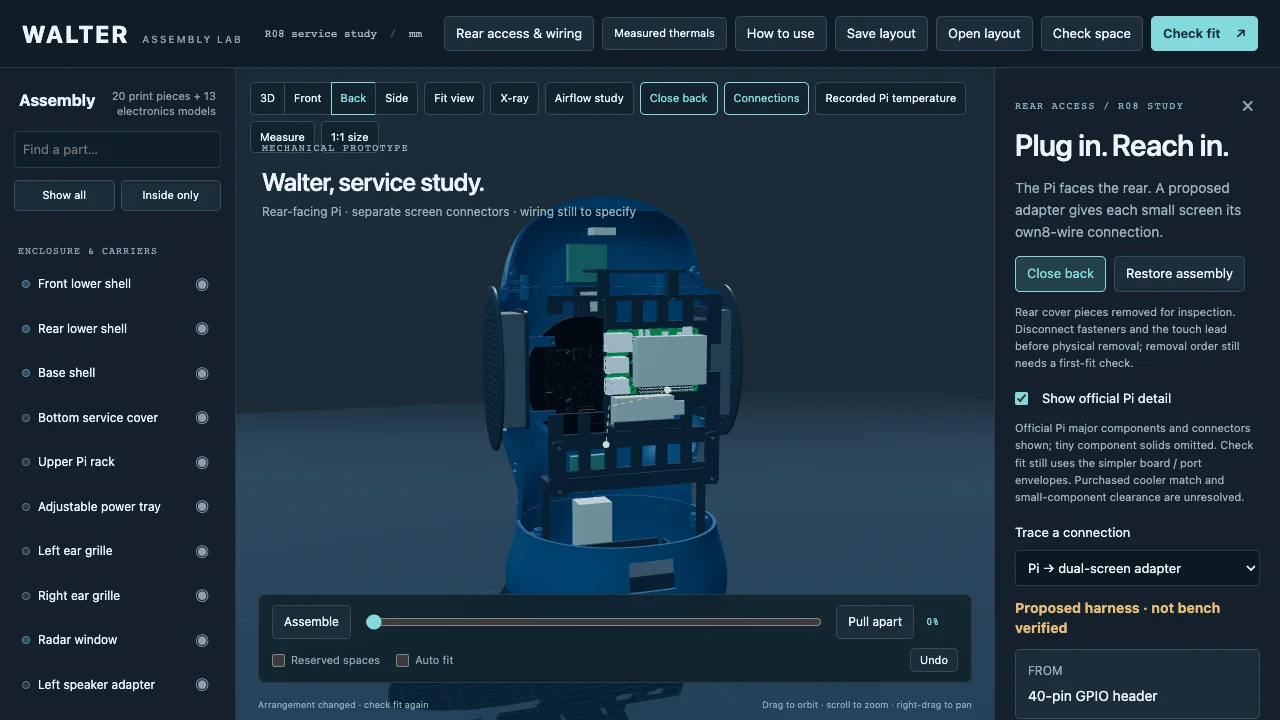
Keep the recognizable helmet form while separating the enclosure, internal rack, electronic references, and reserved space. The R08 study turns the Pi toward the rear to explore service access.
- Shape the enclosure
- Lay out the components
- Study access and assembly
- Prepare for physical fit tests
03 / Where it stands
What works today.
The public viewer shows the actual R08 study geometry with assembled, separated, and electronics-only views. The larger private workbench retains the engineering records and detailed planning tools.
Design study, not a manufactured or validated robot head. Some electronic shapes are reference envelopes. Fasteners, complete wiring, power selection, cooling, and physical fit remain to be resolved; screen artwork is illustrative.
Another side of the work
VacTrack
Explore the next project ↗